As industries keep changing, the need for better, more efficient mixing solutions just keeps growing. Finding the right Dissolution Mixer can really make a difference in both the quality and speed of production. You know, lots of companies—like ChemTech and MixPro—are always coming up with new ways to improve their mixing tech. With all the variety out there, it’s clear that blending needs to be precise, and that calls for mixers that can handle different tasks seamlessly.
Looking ahead to 2026, a top-tier Dissolution Mixer should be reliable and versatile—for example, working well in everything from pharmaceuticals to food processing, where getting the mixture just right is super important. Picking a mixer that fits these needs isn’t just a smart move; it’s pretty much essential. But here’s the thing— not all mixers are equally tough or flexible in different situations. It’s really important to think about things like what materials they’re compatible with, how fast they go, and how much energy they use.
If you dig a little deeper, you’ll find some common hiccups. Sometimes companies skip routine maintenance, which can cut down the lifespan of a mixer. Plus, with all these new technologies, things can get a bit complicated and may lead to user errors if you’re not careful. So, spending some time on training your team to operate the Dissolution Mixer properly can save you from costly mistakes down the line. All in all, understanding these factors can really help industries make smarter choices as they aim for excellence and efficiency.
Overview of Dissolution Mixers in Industrial Applications
Dissolution mixers play a vital role in various industrial applications, particularly in pharmaceuticals and chemical manufacturing. According to a recent industry report, the global dissolution mixer market is projected to grow by 8% annually through 2026. This growth is driven by the increasing demand for efficient mixing processes in drug formulation and chemical production. Precision is key here. Even minor inconsistencies can lead to significant consequences.
In the pharmaceutical sector, dissolution mixers facilitate the uniform distribution of active ingredients. Proper mixing ensures that medications achieve the desired therapeutic effect consistently. Poor mixing, however, can result in variations in drug efficacy. This highlights the need for investing in high-quality mixing equipment. A study noted that 30% of batch rejections were due to inadequate mixing processes.
In chemical manufacturing, dissolution mixers are essential for producing homogeneous mixtures. Industries utilize these mixers to create emulsions, suspensions, and other critical compounds. Yet, operational challenges remain. For example, the difficulty in maintaining consistent viscosity at varying scales can complicate production. Industry experts emphasize the importance of continuous improvement in mixing technology to address these issues effectively.
Key Features to Consider When Selecting a Dissolution Mixer
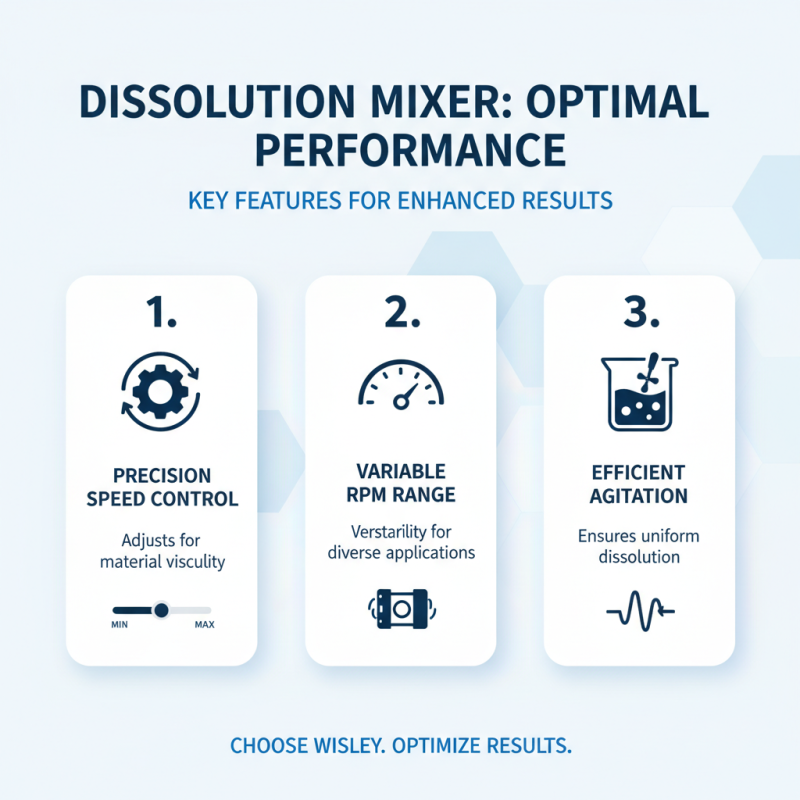
Choosing the right dissolution mixer is crucial for optimal performance. Key features greatly impact results. Speed control is essential. It allows adjustments for different materials. A range of RPM options can enhance efficiency.
Consider the mixing tank's design. An ideal tank should facilitate smooth flow. The shape affects how well ingredients combine. A well-designed mixer minimizes dead zones. This is surprisingly overlooked.
Durability is another significant factor. A robust construction can withstand wear. If not considered, maintenance costs rise. Think about ease of cleaning too. A complex design can lead to contamination risks. Always reflect on the long-term impacts of your choice. Choose wisely.
Top Brands and Models of Dissolution Mixers for 2026
When considering dissolution mixers for 2026, various options stand out. These machines are essential for industries such as pharmaceuticals, food, and cosmetics. Each application has unique requirements, influencing the selection of mixers. For instance, the ability to achieve uniformity in particle dispersion is crucial. An effective Feed Mixer can tackle this challenge, ensuring consistent product quality.
Several models are making waves this year. Some offer advanced speed control, which enhances efficiency. Others focus on user-friendly designs, simplifying operation. However, not every model performs well in every setting. It's vital to assess the specific needs of your application. Some mixers may struggle with viscosity or require excessive maintenance. It’s important to weigh these factors carefully before making a decision.
Price can be a barrier. High-end mixers promise better results, yet they may not fit every budget. Cheaper options exist, but they may compromise on performance. Potential buyers must consider long-term costs, including energy consumption and spare parts. This reflection can lead to better choices. Finding the right dissolution mixer often requires balancing quality and affordability to meet application demands.
What is the Best Dissolution Mixer for 2026 Top Applications?
| Application | Mixer Type | Power (W) | Speed (RPM) | Capacity (L) |
| Pharmaceutical Formulation | Magnetic Stirrer | 120 | 3000 | 2 |
| Food & Beverage | High-Shear Mixer | 1500 | 5000 | 5 |
| Chemical Processing | Vacuum Mixer | 2000 | 1500 | 10 |
| Cosmetic Manufacturing | Colloid Mill | 1800 | 4000 | 3 |
| Biotechnology | Ultrasonic Mixer | 800 | 2000 | 1 |
Applications of Dissolution Mixers in Pharmaceuticals
Dissolution mixers play a crucial role in the pharmaceutical industry. They ensure that active ingredients are uniformly dissolved in solvents. This process is essential for the accurate dosage of medications. Research shows that effective mixing can improve bioavailability by up to 30%. This improvement means patients receive the intended therapeutic effects more reliably.
When considering a mixer, applications vary greatly. Different formulations require specific mixing technologies. A Cone Mixer is popular for its ability to maintain homogeneity. It accommodates a wide range of viscosities. This versatility is vital in research and development phases. Proper selection can dramatically reduce formulation time and enhance product quality.
**Tip:** Always assess your formulation needs before choosing a mixer. The right tool can save you time and resources. Understanding the specific requirements of your application is essential. Conducting thorough tests will help ensure optimal results. Keep in mind that not every mixer suits every application. Do not rush into decisions; take your time to evaluate all options.
Top Applications of Dissolution Mixers in Pharmaceuticals (2026)
Dissolution Mixers for Food and Beverage Industry Needs
Dissolution mixers play a critical role in the food and beverage industry. They are essential for creating uniform mixtures, particularly in products like sauces, dressings, and beverages. For 2026, we see a growing need for innovative mixer solutions that can meet evolving consumer demands. According to industry reports, the global market for high-shear mixers is expected to reach $800 million by 2026. As quality and efficiency become more important, selecting the right mixer becomes paramount.
Investing in an Atex Mixeris a wise choice for safety and efficiency, especially in environments with flammable materials. An Atex Mixer complies with specific safety standards. This ensures operations run smoothly without compromising safety. Increased focus on cleanliness and sanitation cannot be overlooked. Manufacturers must adapt to strict regulations while maintaining product quality.
Tip: Regular maintenance of mixers can prevent costly downtimes. Schedule checks monthly to ensure everything runs efficiently. Consider experimenting with mixer speeds and durations to discover the optimal settings for different recipes. Achieving the right texture and flavor can be challenging. Thus, these adjustments can make a significant difference in final product quality.
Innovations in Dissolution Mixing Technology for 2026
The dissolution mixing landscape is evolving rapidly. As we look ahead to 2026, innovations in mixing technology stand out. New models aim to improve efficiency and consistency. One such potential solution is the Nauta Mixer, designed for optimal flow and blending. It adopts a unique shape that enhances the mixing process. Yet, it’s essential to recognize that not every design works seamlessly in every scenario.
In 2026, we can expect more automated features. These will reduce human error and speed up processes. Advanced sensors could provide real-time data on mixing performance. However, relying heavily on automation might overlook the need for human oversight. Mixing sometimes requires a nuanced approach that machines cannot replicate entirely.
Another trend is the integration of eco-friendly materials in mixer construction. This shift could reduce environmental impact, but challenges remain. Finding the right balance between performance and sustainability is tough. As new technologies emerge, it is crucial to continuously evaluate their effectiveness. Incorporating feedback from users can ensure that these innovations serve their intended purposes.
Best Practices for Maintaining Dissolution Mixers in Operations
Maintaining dissolution mixers is crucial for efficient operations. Regular inspection is key. Check for signs of wear and tear. Over time, parts can degrade, affecting performance. Cleaning is essential. Residue buildup can cause inefficiencies. Schedule frequent cleanings based on usage. This can prevent unexpected downtime.
Operators should receive proper training. They need to understand how each component functions. Misuse can lead to errors. Also, keeping a maintenance log helps track issues. This log provides insights for future improvements. Inconsistent performance may not always be obvious. Addressing small issues early is better than facing major problems later.
Investing time in maintenance pays off. However, some teams may overlook this aspect when under pressure. Prioritize maintenance anyway. This is not just a task; it’s a habit that builds reliability. Encourage a culture of care among teams. A little effort can go a long way in enhancing mixer longevity and productivity.
Enhancing Mixing Efficiency: The Role of Horizontal Ribbon Mixers in the Global Manufacturing Industry and Their Market Trends
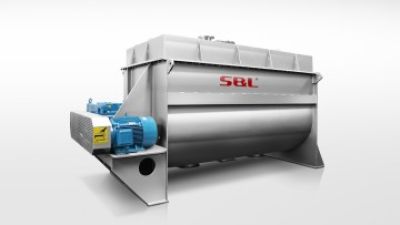
In the realm of the global manufacturing industry, the pursuit of enhanced mixing efficiency is paramount. Horizontal ribbon mixers stand out as a compelling solution, adept at delivering uniform mixing across a variety of materials. The traditional double ribbon design not only ensures thorough blending but also caters to facilities constrained by height limitations, making it a versatile choice for many production environments.
The versatility of horizontal ribbon mixers is further exemplified by their ability to mix heat-sensitive materials gently, preserving the integrity of sensitive compounds. With a range of flexible capacities, these mixers can be tailored to meet the specific needs of different industries, providing scalability and adaptability. The paddle-style and discontinuous ribbon design enhance their efficacy, allowing for efficient mixing without compromising on the quality of the materials being processed. Additionally, the availability of extra-large sizes caters to industries requiring high-volume production, solidifying the horizontal ribbon mixer’s position as a cornerstone of manufacturing efficiency in today’s dynamic market landscape.
FAQS
: The product aims to improve daily convenience. It offers innovative solutions for common problems.
Follow the included instructions closely. Practice can improve your experience over time.
Always read safety guidelines. While generally safe, misuse can lead to accidents.
Yes, customer support is available for assistance. Reach out through the provided channels anytime.
The product is crafted from durable materials. However, exposure to extreme conditions can affect longevity.
Feedback is valuable. There’s always room for improvement. Consider sharing your experience to help.
Yes, there is a warranty available. It covers manufacturing defects, but not typical wear and tear.
Store it in a cool, dry place. Avoid direct sunlight to prevent damage.
The product is designed with sustainability in mind. However, all products have an environmental impact.
Many companies offer return options. Check their policy for specific time frames and conditions.
Conclusion
The article "What is the Best Dissolution Mixer for 2026 Top Applications?" provides a comprehensive overview of the role and significance of dissolution mixers in various industrial applications. Key features to consider when selecting a dissolution mixer include efficiency, reliability, and ease of maintenance, which are crucial for optimal performance in sectors like pharmaceuticals and food and beverage. The article also highlights the latest innovations in dissolution mixing technology that promise to improve mixing outcomes and operational efficiency in 2026.
Moreover, it explores specific applications of dissolution mixers, emphasizing their importance in achieving consistent product quality and effective ingredient blending in the pharmaceutical industry, as well as addressing unique challenges in the food and beverage sector. Best practices for maintaining dissolution mixers are discussed to ensure long-term reliability and performance. This article serves as a valuable resource for industries looking to enhance their mixing processes with the most suitable dissolution mixers available.