When it comes to running a lab, choosing the right equipment really makes all the difference in getting accurate and reliable results. One important tool you can’t overlook is the Dissolution Mixer. It’s pretty much essential for preparing solutions — helping you hit those target concentrations and ensure everything’s mixed evenly, which is crucial for your experiments. As labs keep moving forward and the push for more precision grows, knowing how to pick the right Dissolution Mixer becomes more and more important.
When you’re figuring out what your lab needs, a few things should definitely be on your mind: how much sample volume you’re working with, what kind of materials you’re mixing, and the specific demands of your tests. Each Dissolution Mixer has its own set of features, and those can really impact the quality of your work. By weighing these factors carefully, both your lab managers and researchers can pick a mixer that not only handles your daily workload but also helps boost overall efficiency.
In this guide, we’ll walk through what you should think about when choosing the perfect Dissolution Mixer. The goal is to make sure your lab is armed with the right tools so your research stays innovative. Get the right equipment in place, and your team will be in a better spot to produce consistent, trustworthy results every time you run your tests.

Choosing the Right Dissolution Mixer: Key Considerations for Laboratories
When selecting a dissolution mixer for laboratory needs, several key considerations come into play. The first factor to assess is the mixer’s capacity to handle various volumes, as laboratories often require mixers that can efficiently process small to large batch sizes. According to a report by the Research Institute of Industrial Science, nearly 60% of laboratories indicated the need for versatile mixing solutions that adapt to different experimental requirements. Capacities that range from 50 mL to 5 liters are increasingly becoming standard in modern laboratory setups, allowing for better flexibility in experimental layouts.
Another vital consideration is the mixer’s speed and torque capabilities. Dissolution mixers that offer adjustable speed settings and high torque are essential for achieving consistent and reproducible results, particularly in the pharmaceutical industry. A study published in the Journal of Pharmaceutical Sciences observed that mixers capable of high shear rates resulted in faster dissolution rates, improving the bioavailability of active pharmaceutical ingredients. Furthermore, user-friendly designs and maintenance simplicity also play a crucial role; laboratories prefer equipment that minimizes downtime while maximizing operational efficiency. As technology advances, integrating features such as digital interfaces and automated controls has become a priority for many facilities looking to enhance their productivity and precision in solvent dissolution processes.
Understanding the Various Types of Dissolution Mixers Available in the Market
When selecting a dissolution mixer for laboratory applications, it's essential to understand the various types available on the market to find the most suitable one for your specific requirements. The primary categories of dissolution mixers include overhead stirrers, magnetic stirrers, and high-shear mixers. Each type serves distinct purposes and operates under different principles, making the choice dependent on the material being processed and the desired mixing intensity.
Overhead stirrers are ideal for larger volumes and provide high torque, making them suitable for thick or viscous materials. They often come equipped with various blades and impellers, allowing for customization based on the application. Magnetic stirrers, on the other hand, are well-suited for smaller volumes and are typically used for homogeneous mixing of lighter liquids. Their simplicity and ease of use make them a popular choice in many laboratories. High-shear mixers are designed for applications requiring high energy input to achieve rapid dispersion and emulsification, making them valuable in the pharmaceutical and cosmetic industries.
Additionally, consider the mixer’s features, such as speed control, temperature regulation, and compatibility with different container sizes. Understanding the characteristics of these mixers will empower you to make an informed decision that optimally meets your laboratory's dissolution needs.
Evaluating Mixer Capacity: Matching Equipment to Sample Size Requirements
When selecting the right dissolution mixer for your laboratory, a critical factor to consider is the mixer capacity, which must be appropriately matched to your sample size requirements. According to a recent industry report from the International Society for Pharmaceutical Engineering (ISPE), nearly 40% of laboratory inefficiencies stem from the improper scaling of equipment to the sample sizes being processed. Therefore, understanding the nuances of mixer capacity is pivotal for optimizing dissolution testing and achieving reproducible results.
Typically, dissolution mixers are classified based on their maximum volume capacities, which can range from small, benchtop models accommodating 50mL samples to larger systems designed for volumes exceeding 5L. The choice of a dissolution mixer is not merely about maximizing output; it is also about ensuring that the mixer can effectively incorporate solid samples and facilitate uniform dispersion. Data suggests that mixers operating at capacities more than twice the sample volume can lead to inconsistencies in dissolution results, emphasizing the importance of selecting a mixer with the proper capacity that aligns with both the sample size and the desired analytical outcomes.
Furthermore, advanced dissolution mixers now incorporate real-time monitoring and automated feedback systems that enhance sample integrity and data accuracy. A report by the American Association of Pharmaceutical Scientists (AAPS) indicated that laboratories using appropriately sized mixers experienced a 25% reduction in variability in dissolution profiles compared to those with mismatched equipment. This statistic underscores the necessity of thoroughly evaluating mixer capacity in relation to specific laboratory needs, propelling research quality and operational efficiency to new heights.
The Role of Speed and Power in Efficient Dissolution Processes
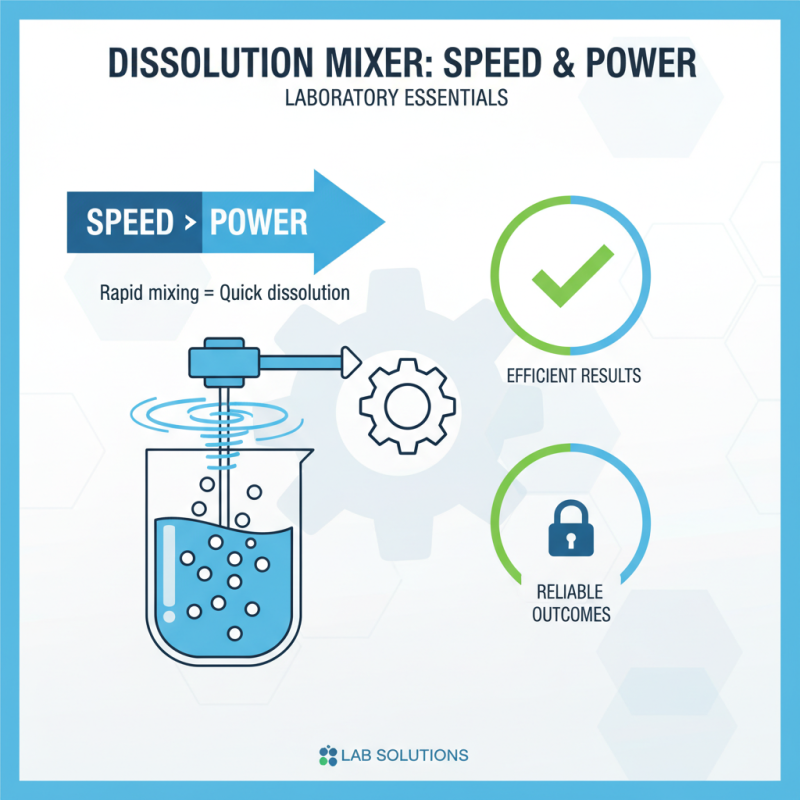
When selecting a dissolution mixer for laboratory needs, understanding the role of speed and power is essential for achieving efficient and reliable results. The speed of a dissolution mixer directly affects how quickly and uniformly solid substances can be dispersed into a liquid medium. Higher speeds facilitate rapid mixing and dissolution, crucial when working with materials that require quick integration to maintain their properties or effectiveness.
Power is another critical factor that significantly influences the mixing process. A powerful mixer can handle more substantial volumes and denser formulations, ensuring thorough dissolution and minimizing the risk of incomplete mixing. In contrast, lower-powered mixers might struggle with more challenging samples, leading to inconsistent results. Therefore, it’s imperative to assess the specific use cases in your laboratory, considering both the materials to be mixed and the required outputs, to choose a mixer that balances speed and power effectively for optimal dissolution performance.
Assessing Material Compatibility: Ensuring Optimal Performance with Chemicals
When selecting a dissolution mixer for your laboratory, assessing material compatibility is crucial to ensure optimal performance with the chemicals you will be working with. Different materials can react unpredictably, impacting the mixer’s efficiency and potentially contaminating your samples. Consider the properties of the chemicals involved, such as pH levels, viscosity, and reactivity, before deciding on the mixer material to avoid any adverse interactions.
Tips: Always consult manufacturer specifications regarding the materials used in the construction of the mixer. This step can help you identify mixers that are chemically resistant or compatible with your specific reagents, reducing the risk of corrosion or failure during operation.
Additionally, think about the intended use of the dissolution mixer in terms of the types of chemicals you'll be mixing. This will not only help in selecting the right materials but also influence the design and capabilities needed for your applications. For highly corrosive or reactive substances, solvent compatibility with the mixer housing, seals, and components is paramount to ensure a safe and effective mixing process.
Tips: Conduct small-scale tests with different mixers to monitor how they interact with your chemicals. This practical approach provides valuable insights into performance and helps fine-tune your choice to meet your laboratory demands effectively.
Cost vs. Quality: Balancing Budget Constraints with Mixer Specifications
When selecting the right dissolution mixer for your laboratory, balancing cost and quality is paramount. According to a recent report by Research and Markets, the global laboratory mixers market is projected to grow at a CAGR of 5.3% from 2022 to 2027, highlighting the increasing importance of high-quality mixing equipment across various research fields. Laboratories must weigh the long-term benefits of investing in high-end mixers against short-term savings that lower-cost options might offer. Often, cheaper mixers compromise on features such as speed control, mixing capacity, and durability, which can ultimately hinder the quality of experimental results and data reliability.
Furthermore, the American Association for Laboratory Accreditation (A2LA) indicates that the precision and accuracy of laboratory equipment, including dissolution mixers, significantly affect the reproducibility of experiments. A high-quality mixer, though more expensive upfront, can lead to improved efficiency, reduced downtime, and better overall performance, making it a more economical choice in the long run. With growing laboratory budgets tightened by economic fluctuations, it is essential to consider not only the initial purchase price but also maintenance costs, warranty and support services, and the potential costs associated with inaccurate or inconsistent data resulting from inferior equipment.
2025 Dissolution Mixer Cost vs. Quality Comparison
This chart compares various dissolution mixers based on their cost and quality ratings, helping laboratories make informed decisions.
Industry Standards and Regulatory Compliance for Dissolution Mixers
When selecting a dissolution mixer for laboratory applications, understanding industry standards and regulatory compliance is paramount. In recent years, the International Organization for Standardization (ISO) has emphasized the importance of standardized methods for dissolution testing to ensure consistent and reliable results across laboratories. According to an industry report by the FDA, approximately 70% of drug applications face delays due to inadequate dissolution data, underscoring the necessity for adherence to established protocols in this field.
Compliance with regulatory guidelines, such as those set forth by the United States Pharmacopeia (USP) and the European Pharmacopeia (Ph. Eur.), is critical for laboratories aiming to meet quality assurance requirements. These standards outline the necessary performance characteristics for dissolution testing equipment, including precision, accuracy, and reproducibility. For instance, the USP chapter provides detailed guidance on dissolution testing methods, highlighting the need for validated equipment that meets specific operational parameters. Laboratories must ensure that their chosen dissolution mixers not only comply with these regulations but also align with Good Manufacturing Practices (GMP) to facilitate smooth regulatory approval processes.
It is also essential to consider the capabilities of the dissolution mixer concerning method development and robustness. A study by the Journal of Pharmaceutical Sciences indicated that mixers equipped with advanced technology show a 25% increase in reproducibility of dissolution profiles, leading to better predictive performance in drug release studies. This data highlights the importance of selecting a dissolution mixer that meets both industry standards and the specific analytical requirements of laboratory workflows to enhance overall research efficiency and compliance.
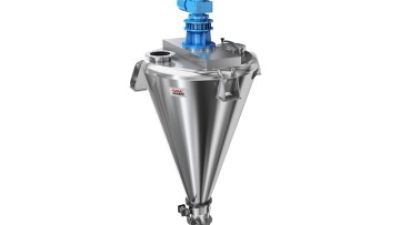
Maximizing Production Efficiency with Conical Screw Mixers: Insights from Industry Reports on Material Handling Innovations
Maximizing production efficiency in the manufacturing sector often hinges on the choice of mixing equipment. The Conical Screw Mixer stands out as a pivotal innovation in material handling, particularly due to its unique low shear mixing capabilities. Designed to provide gentle yet effective mixing, it ensures high-quality results while protecting the integrity of sensitive materials. This method has been shown to reduce product degradation, making it particularly advantageous in industries such as pharmaceuticals and food processing where preservation of material quality is critical.
Recent industry reports indicate that the demand for versatile mixing solutions continues to grow, with a projected increase in the use of conical screw mixers across various sectors. The option to choose between single and twin screw configurations caters to diverse production needs, allowing for scalability and customization. Moreover, features like side discharge and center rotary spraying design enhance operational efficiency, facilitating better handling and processing of materials. The ability to dry liquids in powder further adds to its versatility, establishing it as a mature product in large-scale production environments.
Despite the inherent advantages, users are reminded to adhere to regular maintenance practices due to the traditional construction of the Conical Screw Mixer. Regular upkeep is essential to ensure the long-term efficacy of this equipment, ultimately leading to uninterrupted production processes and sustained material handling efficiency. The insights gathered from the reports suggest that investing in high-quality conical screw mixers can significantly contribute to overall production objectives, aligning well with trends in material handling innovations.
FAQS
: Key considerations include the mixer’s capacity to handle various volumes, adjustable speed and torque capabilities, user-friendly design, and maintenance simplicity.
The mixer capacity must match sample size requirements to minimize inefficiencies and optimize dissolution testing. Improper scaling can lead to reproducibility issues.
Dissolution mixers generally accommodate volumes ranging from small benchtop models of 50 mL to systems designed for over 5 liters.
Higher speeds allow for quick and uniform dispersion of solid substances, while a powerful mixer ensures thorough dissolution, particularly with denser formulations.
Using a mixer with capacity significantly higher than the sample volume can lead to inconsistencies in dissolution results, affecting analytical outcomes.
Many modern mixers incorporate real-time monitoring and automated feedback systems, which improve sample integrity and data accuracy during the mixing process.
According to a report, nearly 40% of laboratory inefficiencies stem from mismatched equipment to sample sizes.
Laboratories using correctly sized mixers can experience a 25% reduction in variability in dissolution profiles, leading to enhanced research quality.
User-friendly designs minimize downtime and improve operational efficiency, making them a preference in laboratory settings.
Features such as digital interfaces and automated controls are increasingly prioritized to boost productivity and precision in dissolution processes.
Conclusion
When selecting a Dissolution Mixer for laboratory needs, several key factors must be taken into account. First, understanding the various types of mixers available in the market can greatly influence decision-making. Evaluating mixer capacity is essential to ensure compatibility with sample size requirements, while the role of speed and power is critical for efficient dissolution processes. Material compatibility also plays a significant part in ensuring that the mixer performs optimally with different chemicals.
Additionally, laboratories must balance cost and quality, finding a mixer that fits within budget constraints while meeting necessary specifications. Adhering to industry standards and regulatory compliance is crucial for maintaining safety and reliability in laboratory environments. By considering these factors, laboratories can make informed choices when investing in a Dissolution Mixer that meets their specific needs.