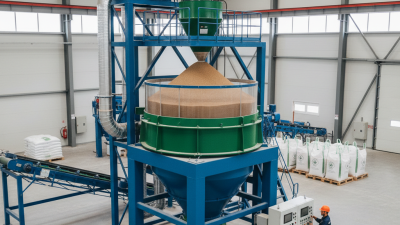
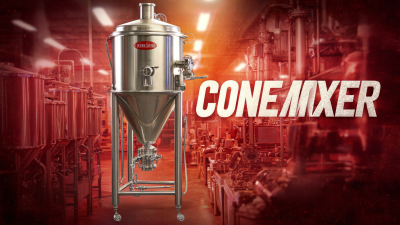
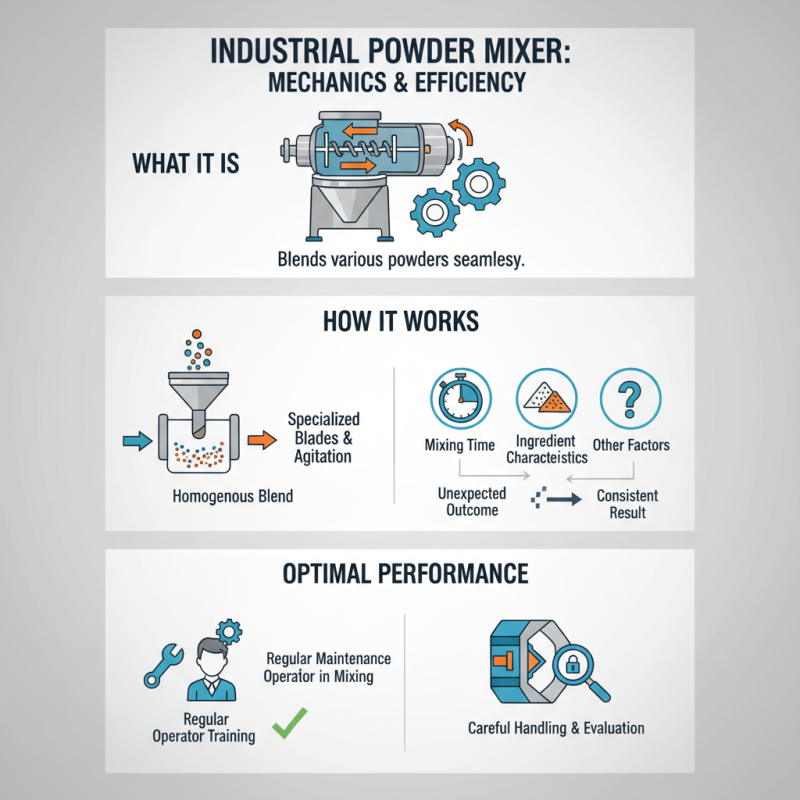
In the manufacturing world, everyone’s always chasing after better efficiency and consistency—it's kind of a big deal. And that’s where the **Industrial Powder Mixer** really comes into play. Companies like MixPro Solutions are using pretty advanced tech these days to blend powders smoothly and reliably. When these mixers do their job right, ingredients come together evenly, which really helps boost the overall quality of the final product.
Getting to know how these **Industrial Powder Mixers** work can actually be pretty interesting. They use these specialized blades and clever strategies to mix powders thoroughly. But, let’s be honest—things don’t always go perfectly. Factors like how long you mix, or the types of ingredients you’re using, can totally change the results. Sometimes, despite your best efforts, the mix might not turn out as expected.
It’s really important to regularly check in on how well an **Industrial Powder Mixer** is performing. Maintenance and proper operator training—things that are sometimes overlooked—actually make a huge difference. If you want your production to run smoothly and the results to stay consistent, paying attention to these details is key. These machines are powerful, but they need to be handled carefully and monitored regularly to get the best outcomes.
What is an Industrial Powder Mixer?
An industrial powder mixer plays a crucial role in many manufacturing processes. It ensures that materials blend evenly to achieve consistent product quality. These mixers are essential in industries like pharmaceuticals, food production, and chemicals. According to industry reports, the demand for efficient mixing solutions has grown significantly, with a projected market growth rate of over 6% annually.
The concept of an industrial powder mixer is straightforward yet intricate. It typically consists of a rotating drum or chamber where powders are combined. The movement creates turbulence, allowing the powders to interact adequately. Some mixers feature adjustable speeds, providing flexibility in the mixing process. The challenge lies in achieving a homogenous mix without segregation. This can be a complex task, especially when dealing with different particle sizes or densities.
Many operators face issues with clumping. Some powders don't mix well under certain conditions, leading to inconsistent batches. Data reveals that up to 15% of production can be affected by poor mixing. This emphasizes the need for proper monitoring and adjustment during the process. Investing in advanced mixers, like an Industrial Powder Blender, might mitigate these concerns and enhance overall efficiency. However, it's crucial to regularly assess the mixing techniques employed to ensure optimal performance.
The Importance of Industrial Powder Mixers in Manufacturing
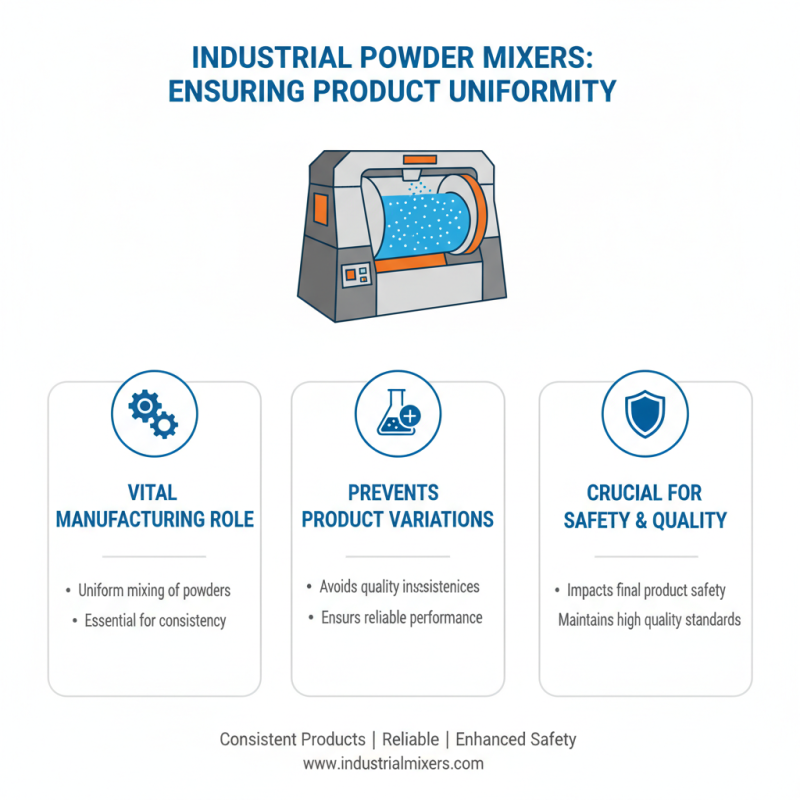
Industrial powder mixers play a vital role in manufacturing processes. They ensure uniform mixing of various powders, essential for product consistency. In many industries, poor mixing can lead to variations in product quality. This inconsistency can affect the final product's performance or safety, making proper mixing crucial.
These mixers work by utilizing blades or paddles that blend materials together. However, achieving the perfect mix can be challenging. Some powders may clump together. Others might settle at the bottom of the mixer. These issues can hinder production efficiency and result in waste. Addressing these challenges requires careful consideration of equipment design and operation.
Choosing the right mixer is not always straightforward. Factors like powder characteristics and processing volume must be evaluated. It’s essential to test different methods to find the most effective solution. Companies should remain open to adjusting their processes and equipment as needed. Continuous improvement in mixing techniques is necessary for optimal results.
Types of Industrial Powder Mixers Available
Industrial powder mixers play a crucial role in various industries. They ensure uniform mixing of powders, granules, and even some liquids. Understanding the different types available helps in selecting the right one for your needs.
There are several types of industrial powder mixers. The Ribbon Mixer is popular for its efficiency in blending dry powders. It features a ribbon-like auger that moves materials inward and outward. This design enhances mixing and is often used for bulk ingredients. However, its performance depends on particle size and moisture content.
Another type is the Paddle Mixer, ideal for heavier materials. It uses a set of paddles to encourage blending. This mixer can handle larger batches but might struggle with small, fine powders. The intense mixing can sometimes lead to ingredient breakdown, requiring careful consideration.
Batch and continuous mixers are also common. Batch mixers work well for specific quantities, while continuous mixers allow for ongoing production but may have challenges ensuring uniformity. Each type has its advantages and drawbacks, highlighting the importance of choosing wisely.
Basic Components of an Industrial Powder Mixer
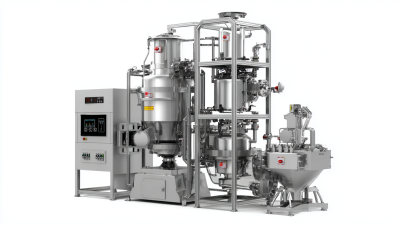
Industrial powder mixers are vital in various sectors like pharmaceuticals, food processing, and chemical manufacturing. These machines ensure products maintain consistent quality and uniformity. The basic components of an industrial powder mixer include the mixing chamber, agitator, drive system, and control panel. Each part plays a role in achieving effective blending of powders.
The mixing chamber houses the materials to be mixed. Its design is crucial for optimizing flow patterns. Agitators, often comprising blades or paddles, help create motion in the powders. According to a recent industry report, more than 70% of mixing accidents occur due to inadequate chamber designs, highlighting the need for careful engineering. The drive system controls the speed and direction of the agitator.
Control panels allow operators to adjust settings based on specific material requirements. Mistakes in mixing settings can lead to inconsistent product outcomes. Studies indicate that improper mixing can reduce product effectiveness by up to 20%. While the technology is advanced, human oversight remains essential in using Industrial Scale Mixers. Continuous training on equipment use is necessary to mitigate errors and ensure optimal mixing results.
How Industrial Powder Mixers Operate: A Step-by-Step Guide
Industrial powder mixers play a vital role in manufacturing. They combine various powdered materials evenly. Understanding how they operate can improve your process.
Industrial Ribbon Mixers are designed to mix powders thoroughly. The process starts with loading the raw materials into the mixer. The machine uses a set of ribbons that rotate around a horizontal axis. This movement ensures that powders move along with the ribbons. It achieves both horizontal and vertical mixing effectively.
Keep an eye on your mixing times. Over-mixing can lead to unwanted heat build-up. Under-mixing may result in uneven product quality. Adjust your settings according to the material type. Always ensure the materials are dry. Moisture can cause clumping, which affects mixing efficiency.
Observe the performance of your mixer regularly. Worn-out ribbons can compromise the quality of your mix. If you notice inconsistencies in your final product, it might be time to inspect. Small adjustments can yield better results. Finding the right balance is crucial for optimal output.
Applications of Industrial Powder Mixers in Various Industries
Industrial powder mixers play a crucial role across various sectors. In the food industry, they ensure uniform blending of ingredients. Consistent mixes are vital for product quality and taste. A poorly mixed batch can lead to customer dissatisfaction. Precise blending can enhance flavors and maintain texture.
In pharmaceuticals, these mixers guarantee accurate dosages of active ingredients. The wrong mix can impact safety and effectiveness. Each powder needs to disperse evenly to uphold product integrity. In cosmetics, uniformity in formulations is essential. An inconsistent product may result in varying colors and textures. Customers expect high standards, which is where proper mixing comes in.
Even with advanced technology, challenges remain. Dust generation can be an issue during mixing. Some powders may clump together, leading to uneven blends. Regular maintenance can help, but it's not foolproof. Operators must stay vigilant. The industrial powder mixer is vital, yet not infallible. Each industry faces unique hurdles in achieving perfection.
Maintenance and Troubleshooting for Industrial Powder Mixers
Industrial powder mixers play a crucial role in various manufacturing processes. To keep them running smoothly, maintenance is essential. Regular inspections of components like paddles and motors help identify wear and tear. If the paddles show signs of damage, they may not mix efficiently. Unaddressed issues can lead to inconsistent product quality.
Routine cleaning of the mixer is vital. Powder residue can accumulate and affect mixing performance. A thorough clean can also prevent cross-contamination. Operators should be trained on efficient cleaning methods. A user-friendly manual can aid understanding and help avoid errors during maintenance.
What about troubleshooting? If the mixer vibrates excessively, it might indicate an imbalance. Check the loading conditions. Improper loading can lead to inefficiencies. Additionally, strange noises may signal mechanical issues. Identifying such problems early is crucial. An Industrial Paddle Mixer can enhance productivity, but only with proper care. Even small lapses in maintenance can result in bigger issues down the line.
What is an Industrial Powder Mixer and How Does it Work? - Maintenance and Troubleshooting for Industrial Powder Mixers
| Component | Description | Common Issues | Maintenance Tips |
| Mixing Chamber | The area where powder ingredients are combined. | Inefficient mixing, residue build-up. | Regular cleaning and inspection. |
| Blades | Agitators responsible for mixing the powders. | Wear and tear or breakage. | Check for damages and replace as needed. |
| Drive System | Mechanism that powers the mixing action. | Overheating, motor failure. | Ensure proper lubrication and check for overheating. |
| Control Panel | Interface to operate and monitor the mixer. | Malfunctions or error messages. | Perform software updates and calibrate sensors. |
Impact of Horizontal Ribbon Mixer on Material Homogeneity: Insights from the 2023 Global Mixing Equipment Market Report
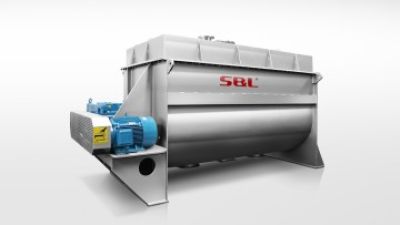
The horizontal ribbon mixer has emerged as a pivotal equipment for achieving material homogeneity, particularly highlighted in the 2023 Global Mixing Equipment Market Report. This device is engineered to meet the nuanced mixing requirements of various industries, thanks to its traditional double ribbon design, which ensures efficient and uniform blending of materials. Its configuration is particularly appealing to facilities with height limitations, offering a practical solution for space-constrained environments.
What sets the horizontal ribbon mixer apart is its ability to gently mix heat-sensitive materials without compromising their integrity. This feature is essential in industries where the properties of the materials must be preserved during processing. Additionally, the mixer comes in a wide range of sizes and capacities, making it adaptable to diverse operational needs. The paddle-style and discontinuous ribbon design facilitate a more controlled mixing process, allowing for effective blending even in extra-large sizes, which is crucial for high-volume production scenarios. With these capabilities, the horizontal ribbon mixer significantly enhances material homogeneity, driving greater efficiency in production workflows across various sectors.
FAQS
: The product aims to enhance your daily routine. It provides convenience and boosts efficiency in tasks.
Follow the user guide. Practice using it regularly for best results. It may take time to master.
Generally, yes. However, individual experiences may vary. Some users might find it challenging initially.
Yes, it's versatile. However, focus on one task at a time for optimal use. Juggling tasks can be tricky.
Refer to troubleshooting tips in the manual. If problems persist, consider reaching out for support.
Regular cleaning is important. Aim for weekly maintenance. Neglecting this can affect performance over time.
Yes, read safety instructions before use. Being mindful can prevent accidents and ensure better longevity.
Changes take time. Reevaluate your usage. Adjust your approach, and be patient with the process.
Yes, but it may lead to differing experiences. Sharing can create valuable discussions, though. Consider feedback carefully.
It depends on your usage scenario. Some users require extra items to maximize effectiveness. Evaluate your needs first.
Conclusion
An Industrial Powder Mixer is a crucial piece of equipment used in various manufacturing sectors to achieve uniform blending of powdered materials. These mixers enhance product quality by ensuring consistent mixtures, which is vital in industries such as pharmaceuticals, food processing, and chemicals. The importance of industrial powder mixers lies in their ability to improve efficiency and reduce material waste.
There are several types of industrial powder mixers available, each designed for specific mixing needs, including batch mixers and continuous mixers. The basic components typically include a mixing chamber, agitators, and drive mechanisms. Understanding how these mixers operate involves a step-by-step process that highlights their functionality. Regular maintenance and troubleshooting are essential to ensure optimal performance and longevity. Overall, industrial powder mixers play a significant role in enhancing productivity and quality in manufacturing processes across various industries.