inquiry
Leave Your Message
0%

When you're figuring out what equipment to use in hazardous environments, an explosion-proof mixer is pretty much a must-have. These mixers are built to run safely in places where flammable stuff might be lurking around. Whether you're in pharma, chemicals, or even food production, the stakes are pretty high. Getting the wrong mixer isn't just a minor mistake — it could actually pose serious safety risks.

There's quite a range of Explosion-Proof Mixers out there, but not all of them are a perfect fit for what you're doing. Think about the materials you're working with — are they corrosive or abrasive? Your mixer needs to survive those tough conditions without compromising safety. And don’t forget to check its certifications — not all mixers are created equal, and some might not meet the necessary safety standards.

Also, consider the features that matter. You want something that boosts efficiency and keeps things running smoothly. Picking a mixer that doesn’t fit your needs can lead to delays and unexpected costs down the line. At the end of the day, investing in a good explosion-proof mixer really means investing in safer, more reliable operations. It’s all about making smart, informed decisions to protect your team and keep things running without a hitch.
Top 5 Tips for Choosing an Explosion Proof Mixer?

Understanding the Importance of Explosion Proof Mixers

Explosion proof mixers play a vital role in industries dealing with flammable materials. They are designed to prevent ignition in potentially explosive environments. When selecting a mixer, understanding its construction and certifications is essential. You need to ensure that it meets the relevant safety standards. This awareness significantly reduces the risk of accidents.

Choosing the right Feed Mixer isn't just about functionality; it's also about adapting to your specific working conditions. For instance, consider the materials that will be mixed. Compatibility can greatly impact the performance of the mixer. Additionally, proper ventilation and placement of the mixer can influence safety. Small details can make big differences.

Another important aspect is regular maintenance. Over time, wear and tear can compromise a mixer’s safety features. This requires ongoing assessment and adjustments. Pay attention to unusual noises or vibrations. These can be signs of trouble that might not be immediately apparent. Being vigilant about maintenance can save lives and resources.

Key Features to Consider in Explosion Proof Mixers

When selecting an explosion-proof mixer, key features should not be overlooked. One important aspect is the construction material. Stainless steel is common. It's durable and resistant to corrosion. Ensure that it meets safety standards for your specific environment. This guarantees reliability in hazardous locations.

Another critical feature is the motor's power and efficiency. A well-designed motor can handle heavy mixing tasks without overheating. Look for options with overload protection, as this prevents motor burnout. Additionally, consider the mixer’s sealing and protection rating. The right rating ensures dust and moisture do not compromise safety.

Finally, think about the user interface. An intuitive control panel simplifies operations. If it’s complex, operators may struggle. A clear display can enhance usability, especially in high-pressure situations. Keep these details in mind while exploring options, ensuring they align with operational needs.

Top 5 Tips for Choosing an Explosion Proof Mixer

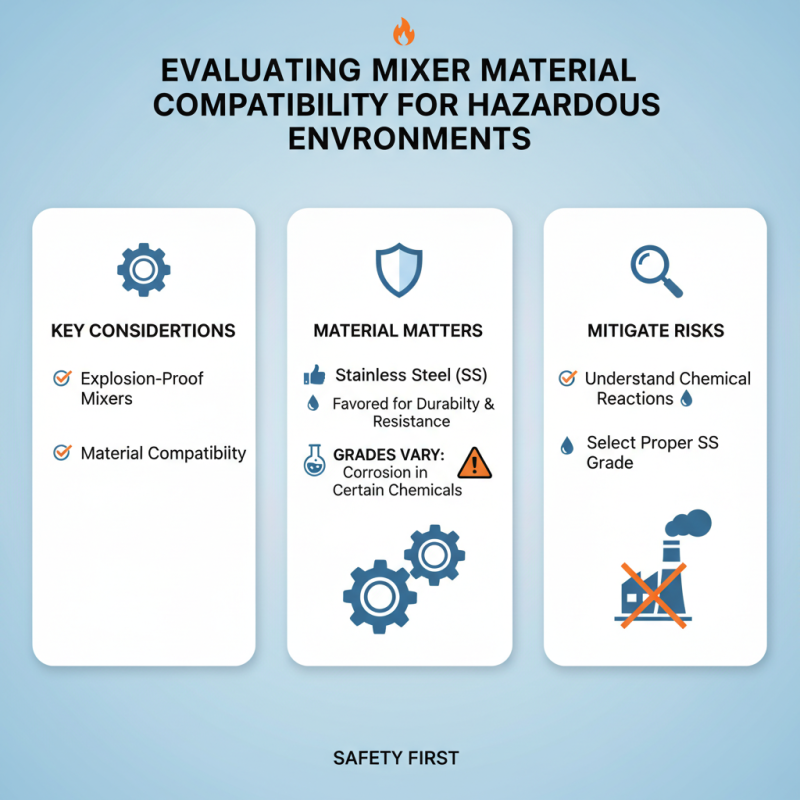
Evaluating Mixer Material Compatibility for Hazardous Environments

Top 5 Tips for Choosing an Explosion Proof Mixer?

When selecting an explosion-proof mixer, understanding material compatibility is crucial. Hazardous environments require mixers made from specific materials that won’t react negatively. Often, stainless steel is favored due to its durability and resistance. However, not all stainless steel grades are alike. Some may corrode in certain chemicals.

Take the time to assess the materials being mixed. Is there a risk of corrosion? Will the mixer’s components affect the process? There are instances where even minor chemical reactions can lead to significant safety hazards. Remember, choosing the wrong material can result in unforeseen failures.

Don’t forget about seals and gaskets. These components play a pivotal role in preventing leaks. Ensure they match the mixer’s primary materials. Conducting a compatibility test is advisable. Occasionally, suppliers may not provide full details about materials. This can be frustrating but necessary for full safety assurance. A mixer might look suitable but could perform poorly in practice. Always dig deeper into material specifications before making a decision.

Assessing the Required Mixing Capacity and Speed

When selecting an explosion-proof mixer, understanding the required mixing capacity and speed is crucial. Mixing applications vary widely. Some processes demand high speeds for emulsification. Others require gentle mixing to preserve ingredient integrity. Assessing these needs helps avoid costly mistakes.

According to a report from the Mixing Technology Association, nearly 25% of industrial mixer failures stem from improper capacity choices. Ensuring your mixer can handle your production volume is vital. For example, if you need to process 1,000 liters of material, a mixer rated below this may not just underperform but could also malfunction.

The mixing speed is equally important. A Cone Mixer might be more suitable for certain applications. It allows for efficient mixing while accommodating fragile materials. Inadequate speed can lead to subpar product quality. Many operators overlook this when selecting a mixer. The balance between speed and capacity often requires further consideration. Unfortunately, many purchase based solely on initial specifications, leading to regret later.

Top 5 Tips for Choosing an Explosion Proof Mixer

Tip Description Mixing Capacity (L) Speed (RPM)
1. Assess Mixing Requirements Determine the viscosity and volume of materials to be mixed. 10 100
2. Check Safety Standards Ensure the mixer complies with local explosion-proof regulations. 20 200
3. Evaluate Material Compatibility Check if the mixer material is suitable for the substances being mixed. 30 150
4. Consider Maintenance Needs Look for mixers that are easy to clean and maintain. 25 175
5. Analyze Mixing Technology Select between various mixing technologies suitable for your application. 15 180

Safety Standards and Certifications for Explosion Proof Equipment

When selecting an explosion proof mixer, understanding safety standards and certifications is crucial. Different regions have their specific regulations. Compliance with these can ensure safe operations. For instance, equipment might need to meet ATEX guidelines in Europe, which defines equipment for explosive atmospheres.

Choosing an Atex Mixer can be challenging. Look for proper certifications like UL, CSA, or IECEx. These certifications indicate the mixer has been tested for safety. Confirm the equipment’s certification matches your operating environment. This is essential for compliance and safety.

Another important tip is to assess the environment where the mixer will be used. Consider factors like dust and humidity. Your explosion proof mixer should be capable of handling these conditions. Ignoring this can lead to dangerous situations. Regular maintenance checks are also vital. They ensure that safety features work correctly over time.

Maintenance Requirements for Explosion Proof Mixers

When selecting an explosion proof mixer, understanding maintenance requirements is crucial. Regular inspections are essential. According to industry reports, nearly 30% of mixer failures are linked to poor maintenance practices.

Explosion proof mixers, including models like the Nauta Mixer, require cleaning after each use. Residual materials can pose risks. Daily checks should focus on seals and gaskets. These components are pivotal in maintaining equipment integrity. If seals are worn, they may allow hazardous substances to escape. This not only creates safety hazards but also increases operational costs.

Operators should also monitor electrical components regularly. A study indicated that electrical failures contribute to 25% of operational downtime in hazardous environments. Furthermore, developing a consistent maintenance schedule enhances reliability. Workers need to be trained on these protocols, ensuring all staff understand how to handle explosion proof mixers safely. Remember, even minor oversights can lead to significant consequences.

Cost Considerations and Budgeting for Your Mixer Selection

When it comes to selecting an explosion-proof mixer, budgeting is crucial. An appropriate budget aids in filtering choices without compromising quality. It is vital to consider not just the mixer cost but also installation and maintenance expenses. Often, businesses overlook these hidden costs, leading to financial strain later on.

Tip 1: Assess your processing needs. Understand your production volume and specific requirements. This evaluation helps narrow down the mixer type, preventing overspending on unnecessary features.

Tip 2: Research different options thoroughly. Prices can vary significantly. Look for reliable suppliers that offer good warranties and support, which can save money in the long run.

Being mindful of safety ratings and certifications is non-negotiable. However, don't forget the importance of potential upgrades. Future-proofing is necessary, even if it requires a slightly higher initial investment. Balancing quality and cost can be challenging, but it's essential for sustainable operations. In this regard, meticulous planning and clear budgeting can prove invaluable.

FAQS

: Why is material compatibility important for explosion-proof mixers?

: Material compatibility is crucial to avoid negative reactions in hazardous environments.

What material is often preferred for explosion-proof mixers?

Stainless steel is commonly favored due to its durability and resistance.

Are all stainless steel grades suitable for mixing?

No, some grades can corrode in specific chemicals. Not all are equal.

How can I assess the materials being mixed?

Check for corrosion risks and how components interact. It's essential to ensure safety.

What role do seals and gaskets play in mixers?

They prevent leaks and must match the mixer's primary materials for integrity.

Should I conduct compatibility tests for materials?

Yes, compatibility tests are advisable, as suppliers may lack full details.

What happens if the mixer is not suitable for the required capacity?

An undersized mixer can underperform, malfunction, or lead to production delays.

Why is mixing speed significant?

Mixing speed affects product quality. Some processes need high speeds, while others need gentleness.

What common mistake do operators make when choosing a mixer?

Many purchase based solely on initial specifications without considering actual needs.

How can I prevent regret in my mixer selection?

Thoroughly assess both capacity and speed before making a final decision.

Conclusion

When selecting an Explosion-Proof Mixer, it is crucial to understand its significance in maintaining safety in hazardous environments. Key features to consider include the mixer’s construction materials, which must be compatible with the substances being processed, as well as the required mixing capacity and speed. It's important to evaluate safety standards and certifications to ensure compliance with regulations governing explosion-proof equipment.

Additionally, proper maintenance requirements play a vital role in the longevity and efficiency of an Explosion-Proof Mixer. Cost considerations should also be factored into the decision-making process, ensuring that the chosen mixer fits within your budget while meeting safety and performance criteria. By carefully assessing these factors, one can make an informed choice that maximally enhances safety and operational effectiveness in environments prone to explosions.

Elena

Elena

Elena is a dedicated marketing professional with a profound expertise in the mixing solutions industry. Working at the forefront of our Shanghai manufacturing hub, she plays a pivotal role in showcasing our commitment to efficiency and reliability. With a strong background in product knowledge,......
Previous Exploring the 2025 Technology Trends in Mixing Solutions with the Best Stainless Steel Mixers