
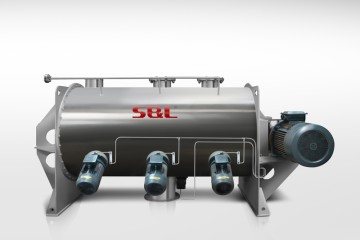
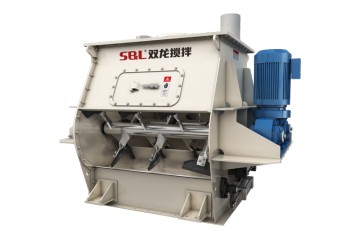
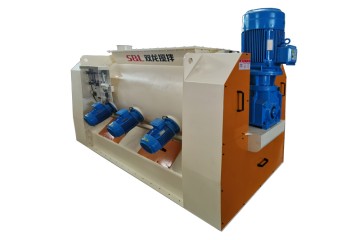
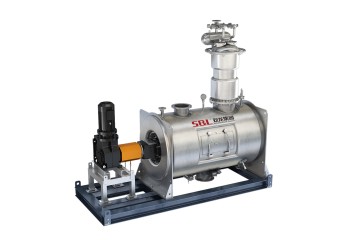
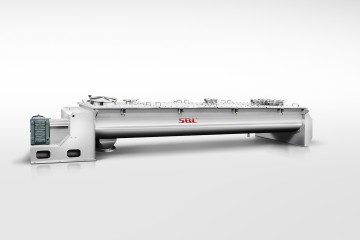

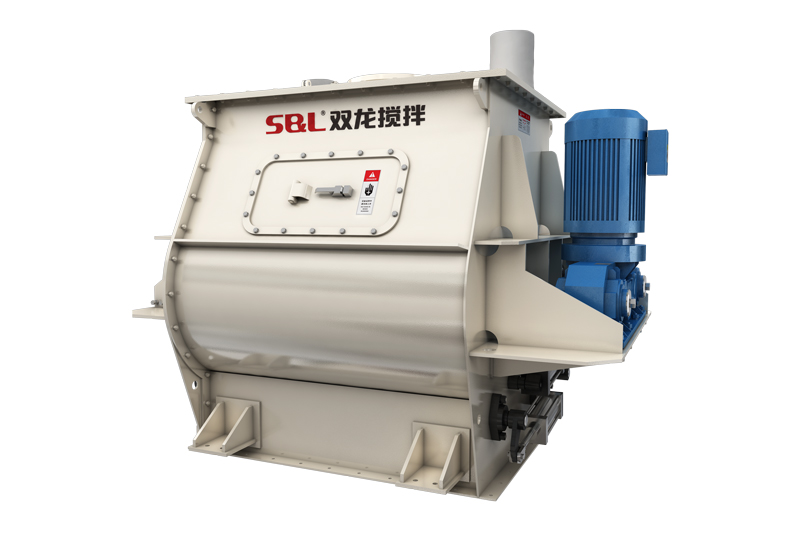
Paddle Mixer for Mortar/Cement - China Suppliers and Factory Offering Efficient Mixing Solutions
Standard Technical Data (WZ-M)
| Total Volume | Capacity Per Batch | Motor Power (KW) |
Shaft Speed (rpm) |
|---|---|---|---|
| 2000L | 800-1400L | 18.5 | 43 |
| 3000L | 1200-2100L | 22 | 43 |
| 4000L | 1600-2800L | 30 | 29 |
| 6000L | 2400-4200L | 45 | 29 |
| 10000L | 4000-7000L | 55 | 29 |
| 13000L | 5000-9000L | 75 | 25 |
Frequently Asked Questions (FAQ)
The recommended loading ratio is typically between 40% and 70% of the total volume. This range ensures fluidization zone formation, rapid cross-blending, and avoids motor overload.
Larger models feature longer paddle radii. Lowering the rotation speed (from 43 rpm to 25 rpm) maintains optimum linear peripheral velocity, reduces mechanical shear, and ensures high torque efficiency for heavy-duty batches.
Yes. Standard motor ratings apply to dry powders with bulk densities under 1.0 g/cm³. For heavier minerals, metallic powders, or liquid injection blending, upgraded drive units and heavy-duty gear reducers can be configured.
Contact surfaces can be constructed from Carbon Steel, SUS304, SUS316L, or equipped with wear-resistant lining plates (e.g., Hardox/ceramic tile). Internal finishes range from standard industrial polishing to sanitary mirror finish (Ra < 0.4 μm).
WZ-M series mixers typically adopt pneumatic full-length bottom doors (bomb-bay doors) for instant, residue-free batch discharge, or pneumatic slide gate valves where controlled discharge is required.
Yes, pneumatic atomizing spray nozzles or liquid distribution manifolds can be integrated along the top lid to evenly inject oils, binders, or liquid additives directly into the fluidization zone.